American School
I didn’t learn about Juneteenth in school.
My parents are a special breed of West Indian immigrants. They forced me to learn all I could about Black people in their new country – this America. Their attitude was that the richness of Black life and the fortitude required for our mere existence, anywhere in the British Empire and certainly in the United States, is deliberately hidden. They felt it was their responsibility to make sure I developed a yearning to discover it. They understood that my knowledge of Black people’s history was defense against being tricked by America into thinking my life doesn’t matter and that my story is insignificant. Waiting on an American school to properly teach me about Black people is a fool’s patience. That is my summary of their philosophy.
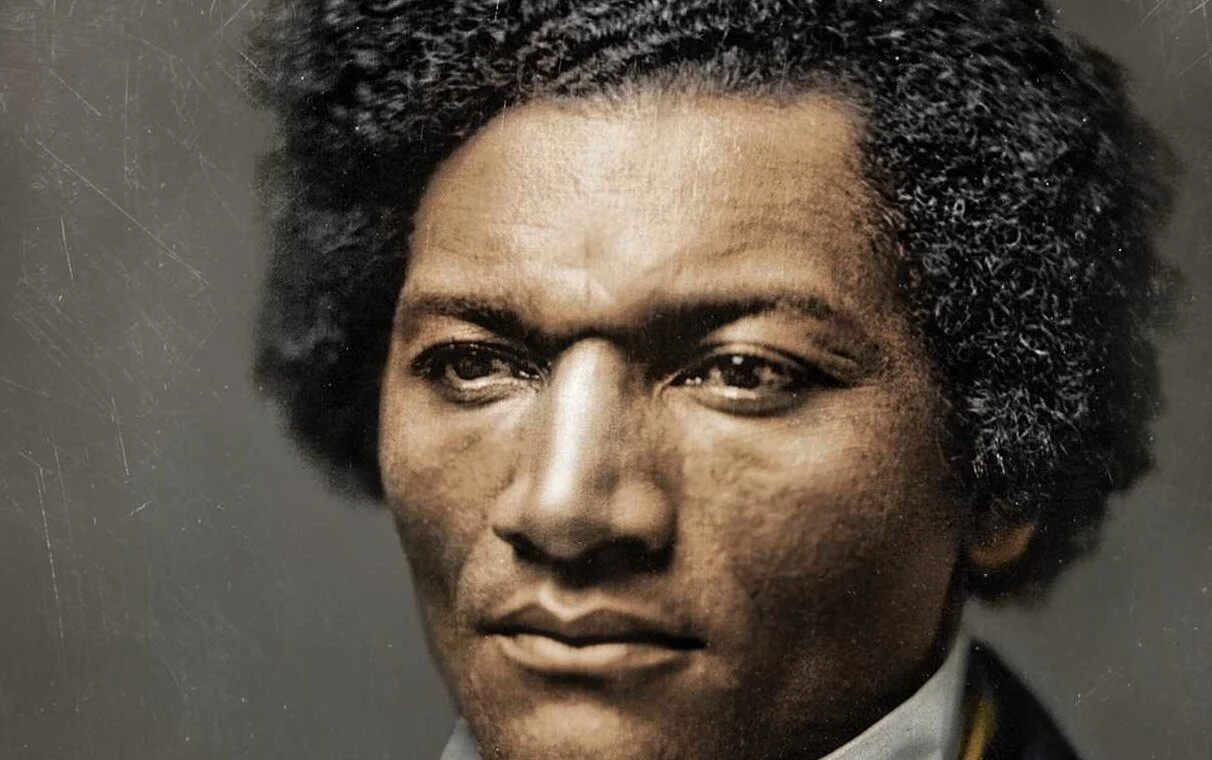
I learned about Juneteenth at the Schomburg Center for Research in Black Culture on Malcolm X Blvd in Harlem, USA. I was in the third or fourth grade. I was doing a report that my parents assigned me on the significance of the life of Frederick Douglass. My dad took me on the train right past the Brooklyn Public Library at Grand Army Plaza all the way to Harlem. He wanted me to learn about Frederick Douglass among Black people, in a library focused on Black people. The setting of learning matters.
If memory serves, we learned about Juneteenth together while I was taking notes about the Emancipation Proclamation, the crowning moment of the Civil War and the abolitionist movement, of which Frederick Douglass was the greatest star.
Juneteenth memorializes the 19th of June 1865, the day that the Union Army arrived in Galveston, Texas to declare directly to Black people there, that slavery had ended. Two hundred forty six years after it began, nearly two and a half centuries, American slavery was over. The day of Jubilee.
I never learned about it in school – in any grade.
Oddly, I did learn about Kristallnacht in my American public school. The Night of Broken Glass, when the Nazis first rounded up German Jews and began the nightmare of the Holocaust. I had to read Elie Wiesel’s Night and Dawn in several grades. I grew up with Anne Frank. She and I will never forget. I learned repeatedly about the heroism of American soldiers in Normandy and Guadalcanal. I know D-Day is June 5th. I learned about the wholesale slaughter of the Japanese in Hiroshima and Nagasaki in defense of so-called civilized Western values. I even know the name of the plane, the Enola Gay. The lionized Americans, killed during their theft of land from Mexico at the Alamo are also stitched into my mind. In my American public school I learned about the Irish famine and I felt bad for those poor Europeans. I even had discussions in class about whether the Irish Republican Army were terrorists or freedom fighters. I know Gerry Adams’ name.
The coverage of the Civil War in my American school was essentially a narrative of the warring ideals of White men – Abraham Lincoln and Robert E. Lee. In the end, the Union was preserved, and slavery was abolished. The humanity of Black people was incidental to the story. Evidence - I learned about Appomattox, where one White man said to another, “I surrender”. But I didn’t learn about Juneteenth, where Black people finally were unchained.
Juneteenth, the symbolic end of America’s longest and darkest legacy never made it into my formal education. When the Civil War began, there were approximately 4,000,000 Black people enslaved in America – the very country in which I currently live. The day signifying their freedom didn’t make it into my American school.
In Georgia, however, the fourth Monday in April is Confederate Memorial Day. It is a state holiday memorializing the soldiers who fought and died for the Confederacy. State government offices are closed. True story. They stopped calling it Confederate Memorial Day after one of the honorees of the Confederacy, Dylann Roof, massacred 9 Black people worshiping in Emanuel AME Church in Charleston, SC in 2015. Now they just call it a state holiday, analogous to Nazi SS Day, in honor of those who fought and died for the Third Reich.
The significance of the omission of Juneteenth is obvious. It is an indication of how deeply embedded the devaluation of Black life in America is. The hole we have to dig out of for Black Lives to Matter is existentially deep.
My favorite line in the Narrative of the Life of Frederick Douglass…. “My long-crushed spirit rose, cowardice departed, bold defiance took its place; and I now resolved that, however long I might remain a slave in form, the day had passed forever when I could be a slave in fact.”
I developed that sensibility despite American school, not because of it.
kamau (@kamaubobb)