Lifting the Veil
On Malcolm X’s 101st birthday I drove from Atlanta into the woods in Alabama. I was invited to give the keynote lecture at a data science symposium hosted by Tuskegee University. Ironically, it was called the DUBOIS Symposium. In this case, DUBOIS is an acronym. It stands for – Data science for Undergraduates to Broaden Opportunities for advancing an Inclusive Society. The partners in the effort are Tuskegee University, UC Berkeley, Laney College, and UC Merced. On its face, it is simply an effort to improve data science instruction and collaboration across a diverse set of institutions – the kind of collaboration that is the bedrock of higher ed cooperation and a darling of the National Science Foundation. It is how we improve, together. It is the kind of story that readily makes it onto institutions’ IG pages and communication briefs and makes for relatively straight forward keynote addresses.
But I was haunted by the origin story. I was there at the beginning.
In an era of government sanctioned historical erasure and the wholesale sanitation of America’s racialized past, remembering origin stories is now a form of communion and resistance. It is a means of eating the bread and drinking the wine of American truth, however bitter it may be.
In December of 2020, while I worked at Google, Dr. Timnit Gebru was fired from the company. The circumstances were never clear, but Dr. Gebru claimed it was a discriminatory and retaliatory response to the nature of her work pointing out the potential bias and negative effects of some of Google’s efforts in AI. That was six months after George Floyd was strangled to death by the police in Minneapolis. Dr. Gebru, an Ethiopian born artificial intelligence researcher, is one of the country’s leading experts in algorithmic bias and the ethical risks of AI systems, particularly faced by communities of color.
For those in the know, she is of the academic pedigree of Dr. Fei-Fei Li at Stanford. Dr. Li was Dr. Gebru’s PhD advisor and is one of the world’s most renowned authorities on AI. When Dr. Gebru earned her PhD in computer science from Stanford in 2017, I think, she was the second Black woman ever to do so – that data is increasingly hard to come by, another instance of erasure.
Also in 2020, Google fired April Curley, a college relations partner serving Google’s relationships with HBCUs.
The very public firings created a maelstrom among the Black and social justice communities about Big Tech’s treatment of Black people. Remember, the country was aflame and at the height of the Black Lives Matter movement and alleged racial reckoning. The presidents of UNCF – the United Negro College Fund, and TMCF – the Thurgood Marshall College Fund, the two primary associations representing HBCUs in America, demanded a meeting with Sundar Pichai, Google’s CEO, to hold the company to account. I was at that meeting.
Leaving the interior details interior, the outcome was that Google offered 10 HBCUs a combined $50 million unrestricted gift. Each institution got $5 million to do with what they will. Google made the announcement with great pride. Tuskegee was one of those institutions.
A year later, in the summer of 2022, the Google funded Tuskegee UC Berkeley partnership kicked off. It consisted of two primary components, one – Tuskegee students spending their summers at Berkeley doing research with Cal faculty and grad students, and two – collaboration among faculty from the two institutions on how they would teach and situate data science in their respective undergraduate curricula.
Notwithstanding the importance of data science which rises to the top in this season of AI “for all”, the funding for the partnership was singularly motivated by Google’s firing of two Black women during a season of American racial revolt. Earlier this year, 2026, the company settled a $50 million class action lawsuit over systemic discriminatory practices against Black people started by those very women. It seems Timnit was telling the truth.
I attended the kickoff event at Berkeley in 2022. Carol Christ, UC Berkeley’s chancellor at the time, and Charlotte Morris, Tuskegee’s president at the time, were both there to welcome the Tuskegee students. The Tuskegee students were regaled, and both university leaders gave soaring remarks about the significance of the partnership and the opportunities for students.
Over the last 15 years, the percent of Black students in CS at Berkeley has in some years approached zero. At Google, the percent of Black tech Googlers moved from 2 percent in 2014, to 4 percent in 2024 – which included the expansion of the definition of being Black to include people of mixed race. Tuskegee has been a Black institution for one hundred forty-five years.
I had the opportunity to sit with President Morris quietly. I asked… At the end of all this, when the money runs out and Google moves on, what then? Where will Tuskegee be? How will the capacity of the institution to deliver high end computing or data science education change? Having Tuskegee students leave to go to Cal for the summer enriches their experiences for sure, but what does that do to improve the capacity of their home department? At some point will Berkeley students vie for a chance to visit Tuskegee for the summer? Given the spirit of the origin story, how could the epicenter of studies on algorithmic bias be centered in the woods of Alabama at Tuskegee, as academic resistance to real racial bias? We reflected on that silently, together. Lamentably, answers were not obvious.
Three cohorts of Tuskegee students went to Berkeley for their summer experiences and were enriched. About 50 in total. After that, Google moved on, the money ran out, and the embers of American racial reckoning are being smothered. No students have gone since. The faculty collaboration continues, but when faculty collaborate across institutions that are not nearly equally yoked the outcomes of those collaborations correlate with the contexts in which they sit.
Also in the fall of 2022, just after the Tuskegee students left to go back to Alabama, UC Berkeley began construction of the nearly $600 million Barbara and Gerson Bakar Gateway building as the new home of the College of Computing, Data Science and Society (CDSS). CDSS is the first new college at Berkeley in 50 years, and it is dedicated to computing and data science – a structural innovation to a storied institution that will transform educational outcomes for thousands of students and faculty for generations. It is scheduled to open this fall.
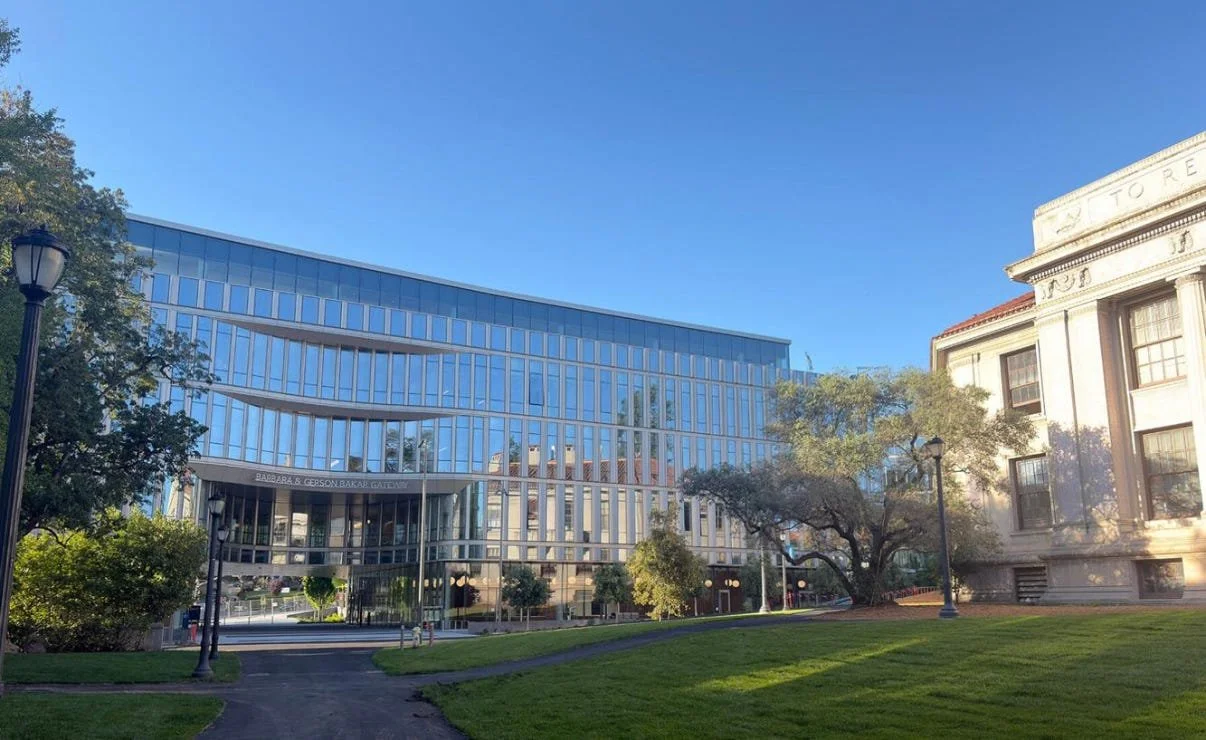
Barbara and Gerson Bakar Gateway Building, UC Berkeley
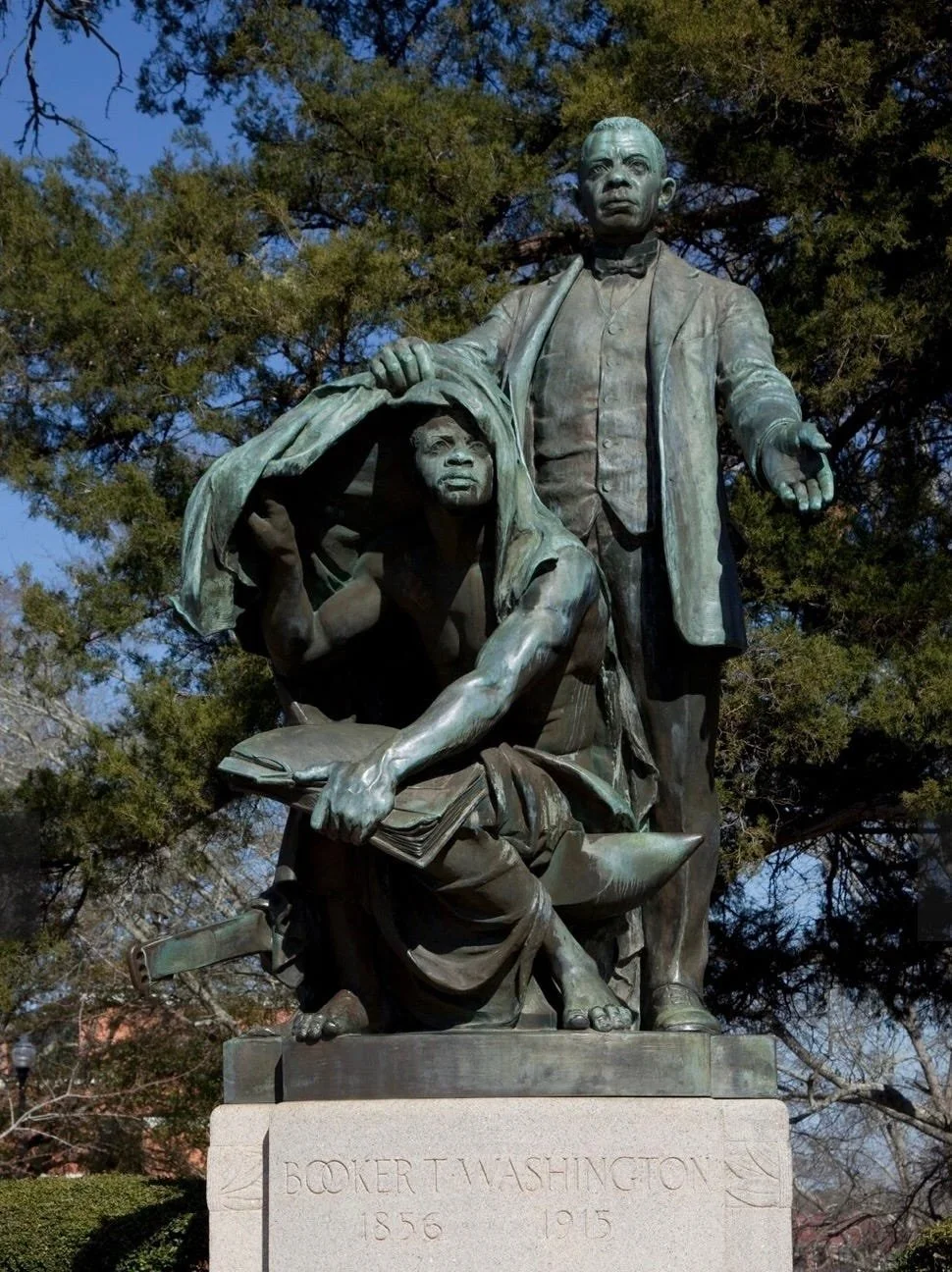
At the entrance to Tuskegee is the famous statue of Booker T. Washington – Lifting the Veil of Ignorance. The faculty there are doing Herculean work and making cherubic sacrifices to lift the veil. They are giants and American heroes absolutely committed to the education of Black people. But the meeting had to be held at Auburn University because Tuskegee doesn’t have a meeting space for 100 people. Several buildings on the campus are shuttered. The infrastructure of the university is fragile. The divergence in direction between UC Berkeley and Tuskegee… glaring.
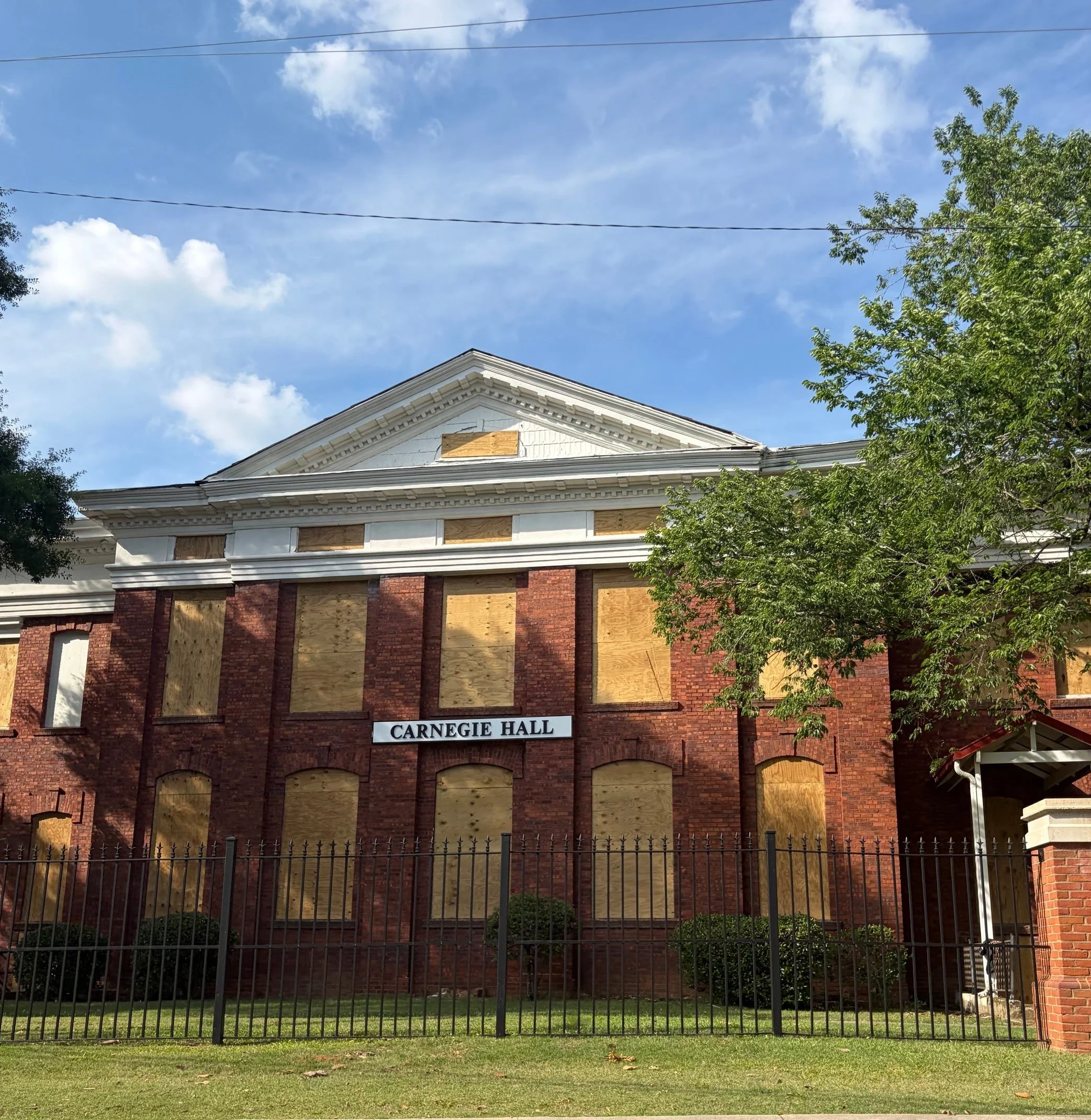
Carnegie Hall, Tuskegee University
Tuskegee is an iconic American institution established in 1881. It was born of Booker T. Washington’s commitment to newly freed Black people right in the midst of the vicious scourge of American terror and the rise of the Ku Klux Klan at the end of Reconstruction. It is the institutional embodiment of Washington’s philosophy laid out in the famous Washington DuBois debates, and in his Atlanta Compromise speech. However you might feel about his philosophy, it is hallowed ground. Washington was born a slave and built a lasting institution out of the ashes of slavery.
Those Alabama woods held both the emergence of an American university for Black people, and Black people hanging from their necks. They saw the worst of American science in the Tuskegee Syphilis Study, and the best of American heroism in the Tuskegee Airmen.
I concluded my address with the idea that it is absolutely critical for us to look back, and to know the origin story. To what spirit does the current enterprise owe its existence? Whether we be up from slavery, or up from George Floyd, our commitment to the capacity, excellence and longevity of these institutions has to be sacrosanct. Our fragility can’t lure us into accepting crumbs when we’ve built from ashes.
What President Morris and I were reflecting on without sharing words, was whether the veil was being lifted, or lowered. In Ralph Ellison’s 1952 novel, Invisible Man, the nameless Black man looks at the very statue at Tuskegee and offers his own wondering:
Then in my mind’s eye I see the bronze statue of the college Founder, the cold Father symbol, his hands outstretched in the breathtaking gesture of lifting a veil that flutters in hard, metallic folds above the face of a kneeling slave; and I am puzzled, unable to decide whether the veil is really being lifted, or lowered more firmly in place; whether I am witnessing a revelation or a more efficient blinding.
kamau