The Price We've Paid
In the beginning there was the Three Fifths Compromise. At the United States Constitutional Convention of 1787, the founding White men of the brand new American nation agreed that the southern states could count each Black slave as 3/5’s of an individual person for purposes of representation. Our system of representative government was established with that basic agreement embedded in it. Fractions of Black people could be counted for representation, but whole Black people would have no say in government, or right to vote, or have government represent us – we were, in form, slaves. The battle for voting rights today was born in that ghastly compromise among White men then.
In America, the idea of an independent democratic representative government is as culturally foundational as the idea that Black people are not fully people. Both are fossilized in the American bedrock. The Revolutionary War – a battle for individual rights and self-determination – was fought during the era of American slavery. They happened at the same time and they are both key cultural markers that help America recognize itself. This philosophical hypocrisy is central to the American story.
When the Trumpian Whites stormed the United States Capitol on January 6th, 2021 they donned not only the Confederate flag, but the Gadsden Don’t Tread on Me flag. The Gadsden flag dates back to the Revolutionary War – American patriots declaring to the oppressive British that they would not be trodden upon.
Concurrent with the Trumpian insurrection was the massive social uprising declaring that Black Lives Matter. That moniker dates back to abolitionist slogans, also of the mid 18th century, asking, “Am I not a man?” The historical tension rooted in the nation’s foundational hypocrisy is obviously still present.
Both themes, both cultural mileposts are inextricably embedded in the American identity. Our problem is that if White people, radical Republican extremists in particular, keep holding on to the idea that Black people are inconvenient subhuman fractions, the representative democracy that we all want can never be achieved. If they continue to believe and behave as if Black people are not people and our lives and interests don’t matter, the United States can never be a settled functional representative democracy.
The founding American ideals of unalienable individual rights, equality and self-determination are, in fact, human yearnings. If the American republic continues to deny those rights to Black people, and other people of color, the nation will constantly be at war with itself. The human quest for freedom and dignity is indomitable, hence the longevity of the Gadsden flag and the universal mantra – no justice, no peace.
Which brings us to Georgia.
Governor Kemp and his Republican colleagues in Georgia are contemporary iterations of old American traditions. I respect that they are not pretending to be anything else. They didn’t like who the people voted for, so they’re changing the people who can vote - and they’re doing so with unmitigated scorn. Among the several egregious aspects of their new voting law, one section makes it illegal to offer people water while waiting in line to vote.
They know the lines at polling stations in Black communities and urban Democratic leaning districts are disproportionately and criminally long, because they made them that way. They reduced polling locations and starved the electoral infrastructure. The scorn, racial animus and basic inhumanity in that particular provision, making it a crime to offer people water, is more than enough to interpret the spirit of the larger law. We can imagine the words of their contemplation, “if these uppity niggers wanna vote so bad, being a little thirsty shouldn’t stop ‘em.”
In Carol Anderson’s masterful portrayal of Black people’s fight for voting rights, One Person, No Vote: How Voter Suppression is Destroying Our Democracy, she tallies up the receipts of the price we’ve paid for the ability to vote. As with so many other things in American life that White people enjoy without question, Black people paid an extraordinary price of generations of terror and bloodshed to acquire this sacred democratic right. Countless Black people were shot and hung and bludgeoned to death for daring to exercise the American right to vote.
This is the southern tradition in which Governor Kemp’s new election law sits. None of his specious arguments of election integrity or spurious claims of concern for all voters, can change these historical facts. There is no parallel counter argument. There is no historic precedent of southern officials granting Black people the right to vote, and the access necessary to do so, without extraordinarily violent and ideological resistance.
Governor Kemp is not a revolutionary. His behavior relative to Black people voting fits comfortably in well-established southern mores.
Southern tradition is dripping with gross and blatant distain for Black people. Anderson captures the spirit of that tradition by highlighting U.S. Senator Theodore Bilbo from Mississippi in the late 1940’s. During his successful primary campaign, much like former President Trump’s racially charged call to arms to White people, Senator Bilbo implored his followers (p.15):
If any nigger tries to organize to vote, use tar and feathers and don’t forget the matches.
This is tradition in the south.
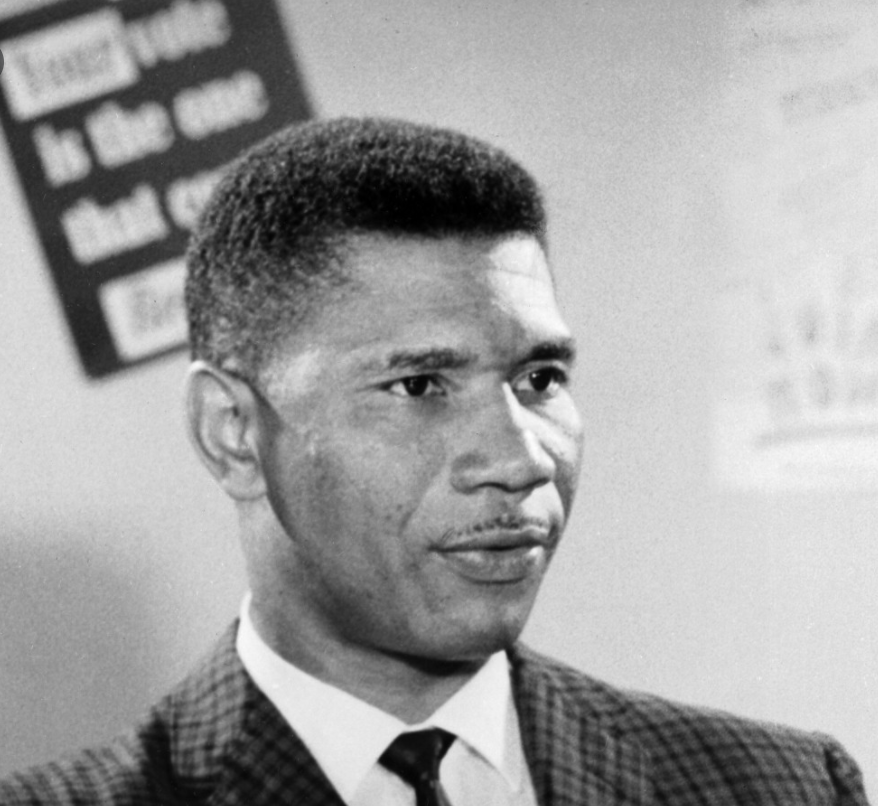
Fannie Lou Hamer – arguably one of America’s most heroic defenders of democracy, beaten mercilessly and repeatedly by Mississippi White mobs and police for registering Black people to vote. Medgar Evers – shot and killed in front of his family for fighting for voting rights. Maceo Snipes – World War II vet shot by firing squad in the doorway of his home for daring to be the only Black person to vote in Taylor County, Ga. Bloody Sunday – state sanctioned terror unleashed on hundreds of Black people, including the late Honorable John Lewis, for fighting for voting rights in Alabama. Rev. C.T. Vivian – beaten and scorned for fighting for voting rights.
The list of Black martyrs and maimed and wounded and terrorized people is too long to know and too heartbreaking to imagine. Such was the nature of the struggle. The modern democratic story in America, culminating with the Voting Rights Act of 1965, is written with the blood of Black people.
The preclearance clause of the Voting Rights Act required any local jurisdictions with a murderous and discriminatory past of preventing Black people from voting to obtain clearance from the U.S. Department of Justice before implementing election process changes. The point was to make sure that any changes were not racially discriminatory. History demonstrated, over and over again, that southern officials would do all they could to disenfranchise Black voters so federal oversight was necessary. There was no ambiguity in the historical record.
The preclearance clause was a preemptive measure designed to counter the century of racist and brutal suppression of the Black vote beginning at the end of Reconstruction. It took the custody of justice out of the hands of racist southern governors and state legislatures and put it in the hands of the federal government. It was a profound shift from the historical pattern of states enacting discriminatory election rules and then individual Black people having to risk their lives and navigate their way through the court system over years to get those changes overturned. It was a simple, profound and effective congressional act – arguably one of the most consequential congressional acts in American history.
When Chief Justice John Roberts, in Shelby County v. Holder, sided with the majority to remove the enforceability of the preclearance clause in 2013, he said to extremist Republican legislatures around the country, find some new language, but you’re free to do as you please. That is exactly what they did. That is the call that Governor Kemp and his Republican colleagues in the Georgia legislature are answering.
It is obvious that the era of America’s second Reconstruction is over. Georgia Senate Bill 202 is now law, and dozens of similar laws are on deck across the country.
Elected Democratic State Representative Park Canon, a member of the Georgia state legislature and defender of Black voting rights, knocked on Governor Kemp’s door to bear peaceful oppositional witness to the signing of the law, and he had her arrested. The symbolism and the historic parallels couldn’t be more clear.
The question now is, who are the most powerful agents in the modern American democracy and what will they do? Black people are covered in several lifetimes of blood and struggle for voting rights. Our willingness to pay the ultimate price to be recognized as whole Americans by a nation that refuses to do so is beyond refute. But what of all these corporate and social agents who have been waving the banner of diversity, and equity, and inclusion? Having real conviction, costs. What are they willing to do in support of this most fundamental act of American inclusion?
What are they willing to pay?
kamau (@kamaubobb)