Warnock
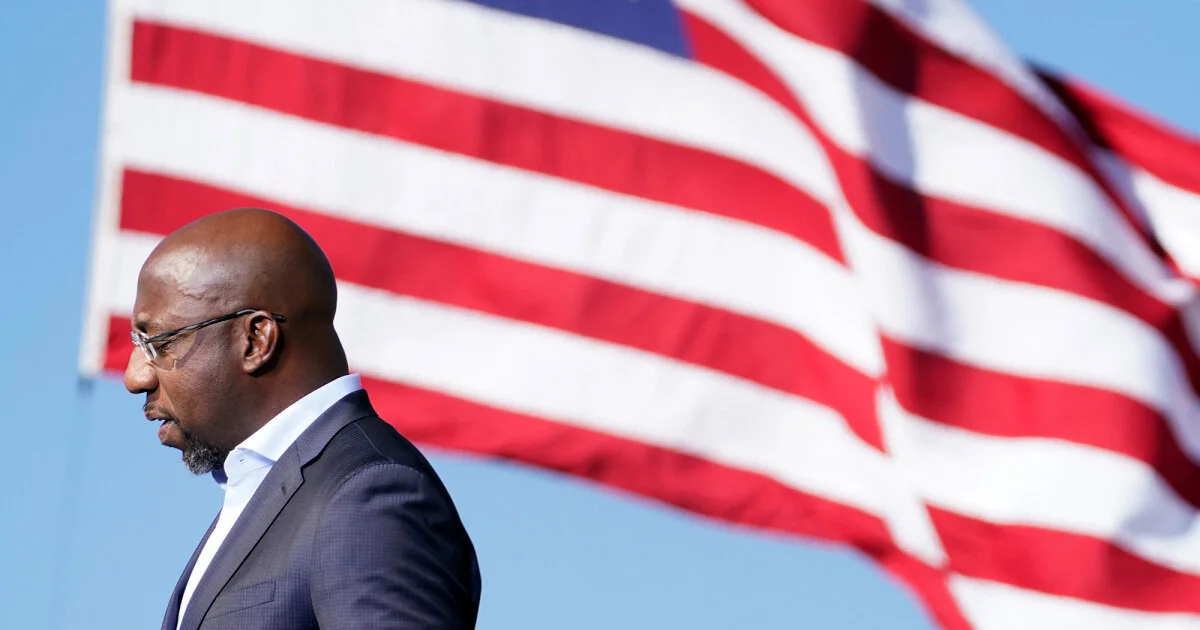
I am not a church-going man, but I believe in God profoundly. Rev. Dr. Dwight Andrews welcomed my wife and me to Atlanta nearly 20 years ago at the First Congregational Church of the United Church of Christ (First Church). Several years ago, he delivered an Easter sermon about faith that I’ll never forget. It was about Christian faith, but he made a direct connection to Black people’s faith in America. Reflecting on that sermon now, makes me deeply appreciate the significance of newly elected Senator Reverend Raphael Warnock.
In that Easter sermon so many years ago, Rev. Andrews made the argument that Jesus’ apostles possessed extraordinary faith. He said that the most profound test of their faith was during the first Easter – the one that the entire Christian narrative is built upon, the one for which there wasn’t a name at the time.
At the end of that fateful Friday when Jesus was crucified by Pontius Pilate at Calvary, He was simply dead. His apostles didn’t know His ascension was eminent. They had to believe. They had to trust in something they hadn’t seen, and hope for something they hadn’t experienced. As it says in Hebrews 11:1, “now faith is the substance of things hoped for, and the evidence of things not seen.” They had to have faith.
The comparison between Black pain and Christ’s redemptive suffering is the cornerstone of Black liberation theology. In so many ways, for Black people, America is defined by suffering. At the same time, we believe in the republic. We believe in its highest ideal, in the idea that in fact all people are created equal. We have faith. We have stolen triumph from torment and progress from opposition time and time again. Our faith is the wellspring of our hope and our perennial push for the nation to improve and to see itself more clearly. We believe in the redemption of the republic.
The irony of that intimate relationship between suffering and faith, between disappointment and hope is an American riddle played out in the hearts of Black people. One of my favorite books is The Cross and the Lynching Tree by Rev. Dr. James Cone, may he rest in peace. In it, he explains this cosmic relationship between the cross at Calvary and the American lynching tree. He uses the connection to help explain how Black people’s faith and plodding ascension is both a gift and an example for America.
Rev. Cone lays out that Black people in America are the substrate of our national faith. He explains, as Rev. Andrews did, that Black people see redemption as possible because our very existence is evidence of a constant cycle of suffering and redemption. According to Rev. Cone (p.160):
The real scandal of the gospel is this: humanity’s salvation is revealed in the cross of the condemned criminal Jesus, and humanity’s salvation is available only through our solidarity with the crucified people in our midst. Faith that emerged out of the scandal of the cross is not a faith of intellectuals or elites of any sort. This is the faith of the abused and scandalized people – the losers and the down and out. It was this faith that gave Black [people] the strength and courage to hope, “to keep on keeping on,” struggling against the odds, with what Paul Tillich called “the courage to be.”
The cross and the lynching tree interpret each other. Both were public spectacles, shameful events, instruments of punishment reserved for the most despised people in society. Any genuine theology and any genuine preaching of the Christian gospel must be measured against the test of the scandal of the cross and the lynching tree. “Jesus did not die a gentle death like Socrates, with his cup of hemlock…Rather, he died like a [lynched Black victim] or a common [Black] criminal in torment, on the tree of shame. “The crowd’s shout, ‘Crucify him!’ (Mark 15:14) anticipated the white mob’s shout ‘Lynch him!’ Jesus’ agonizing final cry of abandonment from the cross, “My God, my God, why have you forsaken me?” (Mark 15:34), was similar to the lynched victim Sam Hose’s awful scream as he drew his last breath, “Oh, my God! Oh Jesus.” In each case it was a cruel, agonizing, and contemptible death.
That bone deep understanding of suffering is part of the identity of Black people in America. Despite America’s marketing campaign to itself, the guilty party, the vile ideology, the crudeness of White supremacy are all still here, alive and well. When the Trumpian Whites stormed the capitol and hoisted the flag of the Confederacy, what were they doing, if not putting us on notice that they are still here and have never left?
Enter Reverend Doctor Raphael Warnock, the newly elected United States Senator from Georgia.
Rev. Warnock is only the 11th Black senator in the history of the US Congress and he is the first from Georgia, one of the original 13 colonies. Georgia has been represented in the US Congress since the first congress in 1789 during the administration of George Washington. The first and second Black US Senators were Hiram Revels and Blanche Bruce of Mississippi during Reconstruction in the 1870’s. There wasn’t another until Senator Ed Brooke of Massachusetts in 1967. The other 7 have been during my lifetime, more than one hundred years since Senator Revels. The historical significance of Rev. Warnock’s ascension to the Senate cannot be overstated, but his presence alone isn’t what powers his significance, it is his faith.
Rev. Warnock is the 5th senior pastor of Ebenezer Baptist Church – the famed church home of Rev. Martin Luther King Jr. Ebenezer was founded in 1886 by Rev. John Parker who was born a slave. Since then, only 3 men before Rev. Warnock have served as the senior pastor of Ebenezer including Rev. Martin Luther King Sr.
Rev. Warnock is one of only 5 Black men that form an unbroken chain of faith that spans from his swearing in to congress last week, directly into American slavery. The lineage is direct. It is sacrosanct.
Rev. Parker, the first pastor, was born an American slave and died a free man. He didn’t know as a child whether he would ever be free. He, as all Black people did, had to trust in something he hadn’t seen, hope for something he hadn’t experienced and fight for something he didn’t know he could win. His faith was forged in the scandal of American slavery. That faith is not theoretical. It’s visceral. It is of the kind the apostles had on Friday night when Jesus was simply, dead. That is the faith in Rev. Warnock.
Rev. Warnock and the pastors before him have seen us along the way – along the stony road. They not only have an abiding faith in God, but in America. They fought for and have seen American possibility and progress – from slave chains to congress. Rev. Warnock represents the continuous embodiment of that faith, of our faith. For him not to be convinced of the ability of God and struggle to improve this nation, would be a betrayal of his sacred trust with us and his own special lineage. The hands of Rev. Parker are on his shoulders assuring him of American possibility. Rev. Warnock will bring that blessed assurance directly into the halls of the United States congress as a gift from Black people to the nation.
From Georgia and Stacey, to America with love – you’re welcome.
kamau (@kamaubobb)